 Save
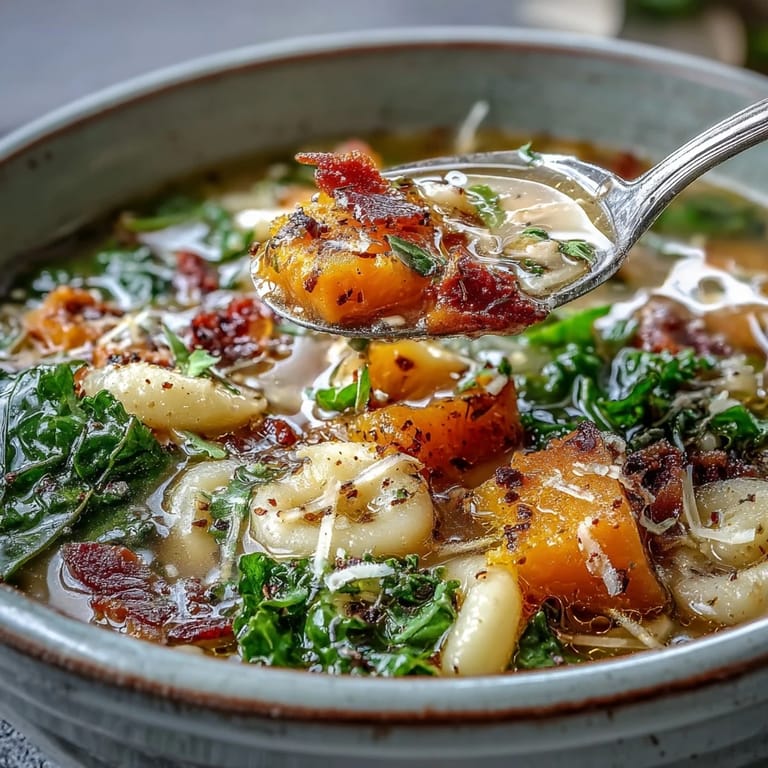
Save October rolled around and my kitchen smelled like roasted squash before I'd even decided what to make for dinner. There on the counter sat a butternut squash I'd grabbed at the farmers market, and suddenly I was thinking about the way my neighbor described her nonna's minestrone—how it changed with the season, how autumn meant squash and kale, how the soup itself tasted like the shift from summer to winter. That conversation stuck with me, and this version was born from that exact moment of standing in my kitchen, wondering what comfort looked like in a bowl.
I made this for my partner on a Wednesday night when everything felt rushed and chaotic. Something about watching the squash soften, the kale tumble in at the last moment, and the whole pot come together in under an hour reminded me why I cook. By the time we sat down with bowls and bread, the day had slowed down entirely.
Ingredients
- Pancetta, diced: This isn't optional for flavor—the rendered fat becomes your flavor base, rich and salty in the best way.
- Olive oil: Good enough to taste, because it's one of only a few fats carrying this soup.
- Yellow onion, diced: The foundation everything else builds on; don't rush the softening step.
- Carrots and celery: The classic trio with onion, sweetness and subtle earthiness that balance the soup.
- Butternut squash, cubed: Cut it into bite-sized pieces so it cooks evenly and adds body without overpowering.
- Garlic cloves, minced: Two is enough; more will turn bitter as the soup simmers.
- Kale, chopped: Hearty enough to hold its shape, tender enough to eat without fighting it.
- Diced tomatoes with juice: The canned version is actually better here than fresh—the acidity keeps everything bright.
- White beans, drained and rinsed: Cannellini work perfectly; rinsing them prevents the soup from becoming starchy and cloudy.
- Ditalini pasta: Small tubes that hold broth without becoming mushy; add it late so it doesn't absorb all your liquid.
- Chicken or vegetable broth: Use something you'd actually drink, because it's the backbone.
- Fresh thyme and bay leaf: Thyme adds subtle warmth; the bay leaf you'll fish out at the end, but it quietly holds everything together.
- Black pepper and salt: Season as you go, not all at once at the end.
- Fresh parsley and Parmesan: The final notes that make it taste finished.
Tired of Takeout? 🥡
Get 10 meals you can make faster than delivery arrives. Seriously.
One email. No spam. Unsubscribe anytime.
Instructions
- Render the pancetta:
- Heat oil in your pot over medium heat, then add pancetta. You want it golden and crisp at the edges, about five minutes—listen for the sizzle to quiet down, which means the water's gone and you're left with pure flavor.
- Build your base:
- Once pancetta's out, the fat is still hot; add onion, carrots, and celery and stir often. You're looking for them to soften and start turning golden at the edges, which takes about five minutes and smells exactly like the start of something good.
- Add squash and garlic:
- Stir in the squash and minced garlic, letting it cook for two minutes until your kitchen smells garlicky and sweet. Don't skip this moment—it's where the flavors wake up.
- Bring it together:
- Pour in the tomatoes with their juice, add the beans, broth, thyme, and bay leaf. Bring it to a simmer—you'll see small bubbles breaking the surface rather than a rolling boil—then cover and let it cook for twenty minutes.
- Finish with pasta and kale:
- Remove the lid, stir in kale and pasta, and simmer uncovered for eight to ten minutes. The pasta will absorb liquid and soften, the kale will go dark and tender, and you'll know it's ready when the pasta tastes like it should.
- Taste and adjust:
- Fish out the bay leaf, take a spoonful, and decide what it needs—more salt, more pepper, a crack more of both. This is the moment that separates good soup from soup that tastes like you.
 Save
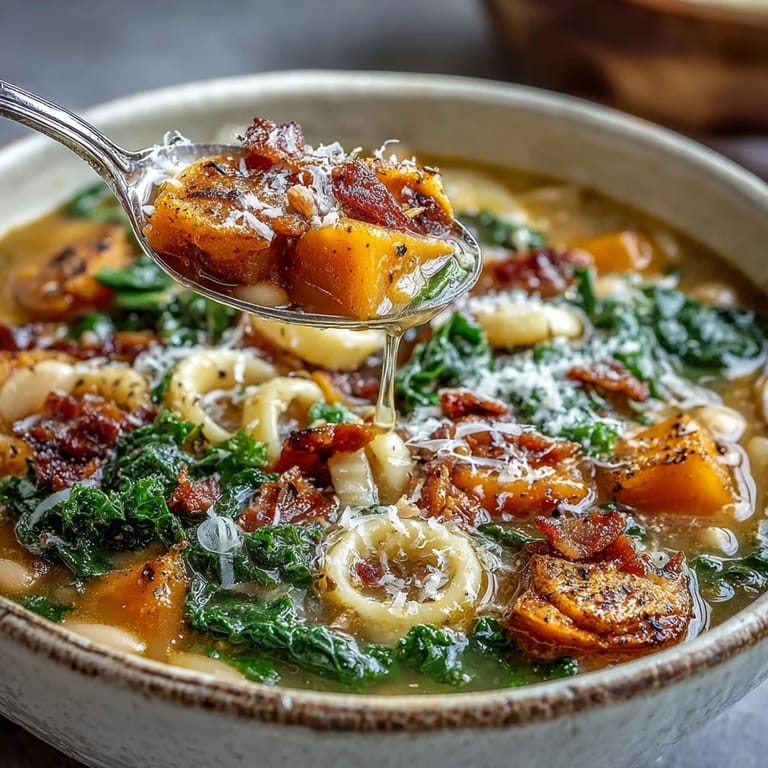
Save There was a moment, maybe three minutes after I ladled the first bowls, when I realized my partner had stopped looking at their phone. Something about eating together, something about soup that's warm and complete, made the evening feel intentional. It was just dinner, but it didn't feel like just anything.
Making It Your Own
This recipe is flexible in a way that feels generous. If butternut squash isn't what you have, try zucchini or sweet potato—they'll cook similarly and taste beautiful. Different greens work too; I've used spinach when kale wasn't around, and while it wilts faster, the soup still tastes right. The vegetables are suggestions more than rules, which is exactly how minestrone should feel.
For Vegetarians and Others
Skip the pancetta and use vegetable broth, then add a pinch of smoked paprika to the pot when you add the squash—it gives you that depth and slight smokiness you'd otherwise get from the pork. The soup becomes something different but equally satisfying, and somehow lighter while still feeling substantial. I've served it this way to friends with dietary restrictions, and nobody felt like they were missing a thing.
Serving and Storage
Serve this soup hot with crusty bread, the kind that's sturdy enough to soak up broth without falling apart. A generous handful of Parmesan on top isn't extravagant; it's necessary. Leftovers keep for four days in the fridge and taste even better the next day, when all the flavors have gotten to know each other better.
- Pancetta stays crispy if you keep it separate and add it to individual bowls rather than stirring it back into the pot.
- Reheat gently over medium-low heat, adding a splash of broth if it's thickened too much in the fridge.
- This soup also freezes well for up to three months, though the pasta can get soft—consider leaving pasta out and cooking it fresh when you reheat.
 Save
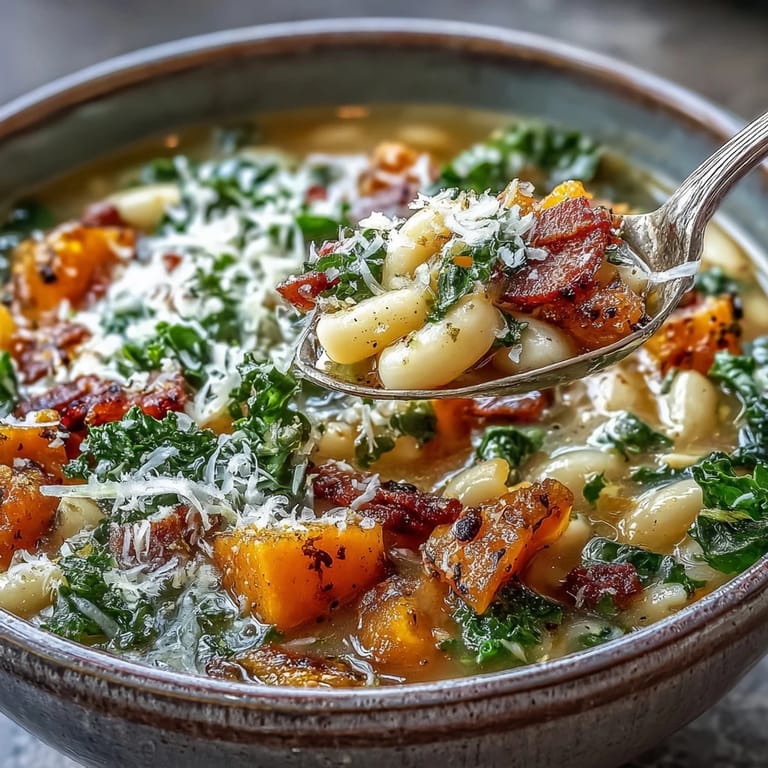
Save This soup tastes like autumn in a bowl, like the kitchen staying warm long after dinner's finished. Make it and you'll understand why people keep coming back to minestrone, season after season.
Recipe FAQs
- → Can I make this minestrone vegetarian?
Yes, simply omit the pancetta and use vegetable broth instead of chicken broth. Add a pinch of smoked paprika to bring depth and a subtle smoky flavor to the soup.
- → What pasta shapes work best in this soup?
Ditalini is traditional, but any small pasta like elbow macaroni, orzo, small shells, or tubetti work beautifully. Adjust cooking time according to the package instructions for your chosen pasta.
- → How do I store leftover minestrone?
Store cooled soup in an airtight container in the refrigerator for up to 4 days. Note that pasta will absorb liquid over time, so you may need to add extra broth when reheating.
- → Can I freeze this fall minestrone?
Yes, but for best results, freeze the soup without the pasta. Add freshly cooked pasta when reheating. Freeze in portion-sized containers for up to 3 months.
- → What can I substitute for butternut squash?
Sweet potato, pumpkin, or acorn squash make excellent substitutes with similar cooking times. Cut into similar-sized cubes to ensure even cooking throughout the soup.
- → How can I make this soup gluten-free?
Use certified gluten-free pasta or omit pasta entirely and add an extra can of white beans for heartiness. Always check your broth and other packaged ingredients for gluten-containing additives.