 Save
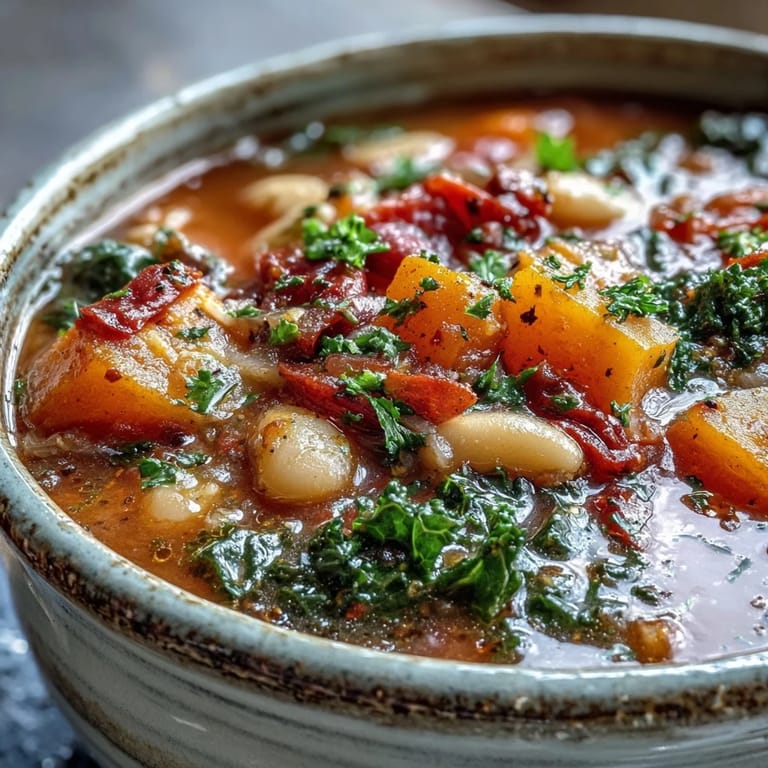
Save There's something about the smell of butternut squash caramelizing in olive oil that makes a gray afternoon feel less lonely. I discovered this minestrone years ago when I needed to use up a bunch of kale before it wilted in my crisper drawer, and what started as a practical decision turned into one of those soups I find myself making whenever the weather shifts cold. The first spoonful always surprises me—that creamy sweetness from the squash mixed with the earthiness of beans and the slight bite of red pepper flakes feels both comforting and alive at the same time.
I made this for my neighbor last winter when she was recovering from surgery, and she later told me she'd been eating it straight from the container while sitting on her kitchen counter, which somehow felt like the highest compliment. There's something about a bowl of minestrone that feels like someone's saying they care without it being heavy-handed about it.
Ingredients
- Olive oil: Use a quality one you'd actually want to taste, since it's not being cooked away—it becomes part of the soup's character.
- Yellow onion, carrots, and celery: This is your flavor foundation, sometimes called soffritto, and there's no rushing it; those few minutes of sautéing do invisible work.
- Garlic cloves: Mince them fresh rather than using the jarred stuff, because fresh garlic blooms in the heat while jarred garlic just gets bitter.
- Butternut squash: Peel it while it's still firm and raw; once it's cooked it becomes almost impossible to cut through—I learned this the frustrating way.
- Zucchini: Dicing it into roughly the same size as your squash pieces helps everything cook evenly and look intentional.
- Fresh kale: Remove the tough center stems before chopping, and tear the leaves into bite-sized pieces so you're not trying to chew through long strands.
- Diced tomatoes: Canned tomatoes are actually more reliable than fresh ones for soup; they're picked and processed at peak ripeness and bring consistent acidity.
- Cannellini beans: Draining and rinsing them removes the starchy liquid that would make your soup cloudy and stodgy.
- Small pasta: Ditalini and elbow macaroni are classic choices because they actually sit in the spoon instead of sliding around.
- Vegetable broth and water: Using a mix of both rather than all broth keeps the soup from tasting one-note and lets the vegetables shine.
- Dried oregano, thyme, and rosemary: These Mediterranean herbs are what make a vegetable soup taste Italian rather than generic; don't skip them.
- Red pepper flakes: Optional but really worth including—they add a whisper of heat that wakes up your palate without making anyone's mouth burn.
Tired of Takeout? 🥡
Get 10 meals you can make faster than delivery arrives. Seriously.
One email. No spam. Unsubscribe anytime.
Instructions
- Warm the oil and build your base:
- Heat olive oil in a large pot over medium heat and add your diced onion, carrots, and celery. You're looking for that moment after about five or six minutes when everything turns golden and soft and starts smelling serious; don't rush this step because it's where the soup's flavor actually gets born.
- Bloom the garlic:
- Stir in the minced garlic and let it cook for just a minute until it becomes fragrant—this short window is crucial because garlic burns quickly and tastes bitter if you're not watching.
- Add the squash and zucchini:
- Stir in your diced butternut squash and zucchini and let them cook for a few minutes, stirring occasionally so they start to soften around the edges.
- Pour in the liquid and tomatoes:
- Add your diced tomatoes with their juices along with the vegetable broth and water, then bring everything to a boil over medium-high heat.
- Season and simmer:
- Stir in the oregano, thyme, rosemary, and red pepper flakes, then reduce the heat and let it simmer gently uncovered for about fifteen minutes—this is when you can step back and the soup essentially takes care of itself.
- Add beans and pasta:
- Stir in the drained cannellini beans and your small pasta, then simmer for another eight to ten minutes until the pasta is tender and the squash has softened enough to break with the back of a spoon.
- Finish with kale:
- Stir in the chopped kale and let it wilt for just a couple of minutes—kale loses its character if you cook it too long, so watch for that moment when it turns from bright green to dark and tender.
- Taste and adjust:
- Remove the pot from heat, stir in the fresh parsley, and taste the soup honestly; add salt and pepper until it tastes like something you actually want to eat.
 Save
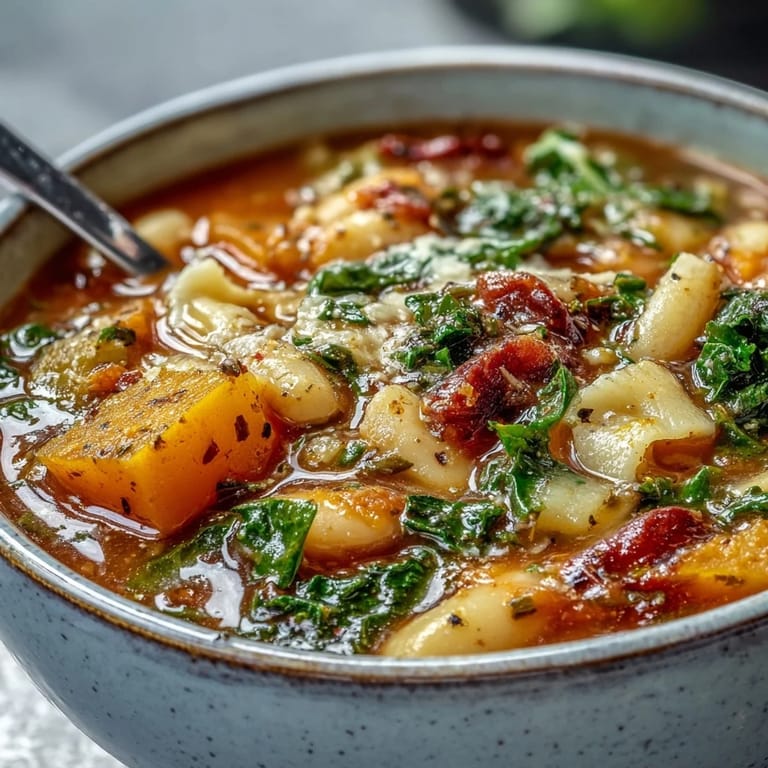
Save My daughter asked for this soup three days in a row last November, and there was something about that repetition that made me understand how comfort food really works—it's not about impressing anyone, it's about creating something familiar enough to come back to. That's when I stopped thinking of this as just soup and started thinking of it as something I was building into our winter routine.
Why This Soup Works in Winter
Butternut squash is practically a synonym for autumn and winter—it stores well, it gets sweeter as it sits, and it has this almost creamy texture when it's cooked that makes a broth feel substantial without any cream involved. Kale is another winter vegetable that actually improves after the first frost because the cold converts its starches to sugar, so using it in January tastes noticeably better than using it in August. The combination of these two vegetables with beans and pasta creates a soup that feels genuinely nourishing rather than like you're eating something because you should.
Variations and Substitutions That Actually Work
This soup is flexible enough to pivot based on what's in your produce drawer or what dietary needs are sitting at your table. I've swapped the cannellini beans for chickpeas and the soup became earthier and more filling, and I've replaced the kale with spinach on nights when I didn't have kale and honestly preferred how the spinach melted into the broth. A Parmesan rind simmered in the broth adds an umami depth that transforms the whole thing, though you'll want to fish it out before serving because nobody wants to bite into a piece of rind.
- For vegan cooking, skip the Parmesan entirely or use a cashew-based parmesan alternative that's become surprisingly good.
- Gluten-free pasta swaps in seamlessly, though you might want to use a brand that holds its shape better since some gluten-free pastas dissolve into the broth.
- If you want to add protein without using beans, a handful of diced firm tofu or even small meatballs cooked separately works beautifully.
Serving Suggestions and Pairings
A bowl of minestrone is technically a complete meal, but it becomes something special with good bread alongside it—the kind with a crust that crackles when you bite into it, so you can use it to push the last vegetables into your spoon. Pair it with a crisp white wine if you're having wine, something like a Pinot Grigio that won't compete with the soup but will refresh your palate between spoonfuls. In my house, we've also discovered that a grilled cheese sandwich halved and floating on top of the soup is not a mistake but actually a revelation, though that's perhaps not traditional.
 Save
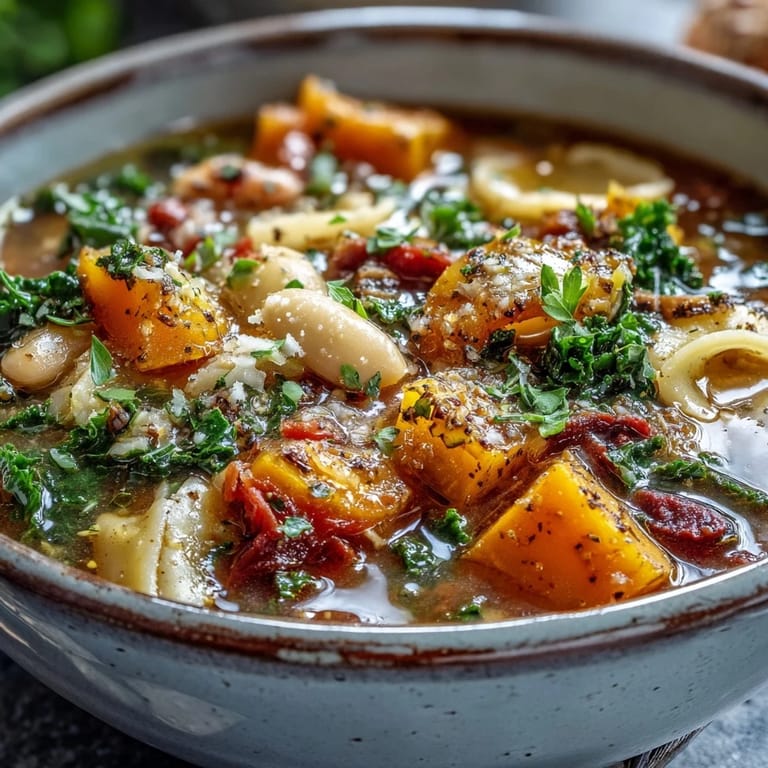
Save This minestrone has become the soup I reach for when I want to feed people something that tastes like love without feeling fancy or fussy. Once you make it, you'll understand why it's been part of Italian home cooking for so long.
Recipe FAQs
- → Can I make this minestrone ahead of time?
Yes, this soup stores beautifully. Make it up to 3 days ahead and refrigerate in an airtight container. Note that the pasta will absorb more broth as it sits, so you may need to add extra vegetable broth when reheating.
- → What can I substitute for butternut squash?
Sweet potato, acorn squash, or even diced pumpkin work wonderfully as alternatives. They provide similar sweetness and texture. Just ensure the pieces are cut to a similar size for even cooking.
- → How do I make this soup more filling?
Increase the pasta to ¾ cup, add an extra can of beans, or include diced potatoes along with the butternut squash. You can also serve it with a side of garlic bread or a mixed green salad.
- → Can I freeze leftover minestrone?
Absolutely. Cool completely and freeze in portion-sized containers for up to 3 months. For best results, consider freezing before adding the pasta and cook it fresh when reheating to maintain better texture.
- → What other greens work besides kale?
Spinach, Swiss chard, or escarole are excellent substitutes. Spinach wilts very quickly, so add it in the final minute of cooking. Chard and escarole have a heartier texture similar to kale.
- → How can I add more protein to this soup?
Stir in cooked Italian sausage, shredded rotisserie chicken, or white beans for extra protein. For a plant-based boost, add cubed firm tofu or an additional can of chickpeas during the final simmer.