 Save
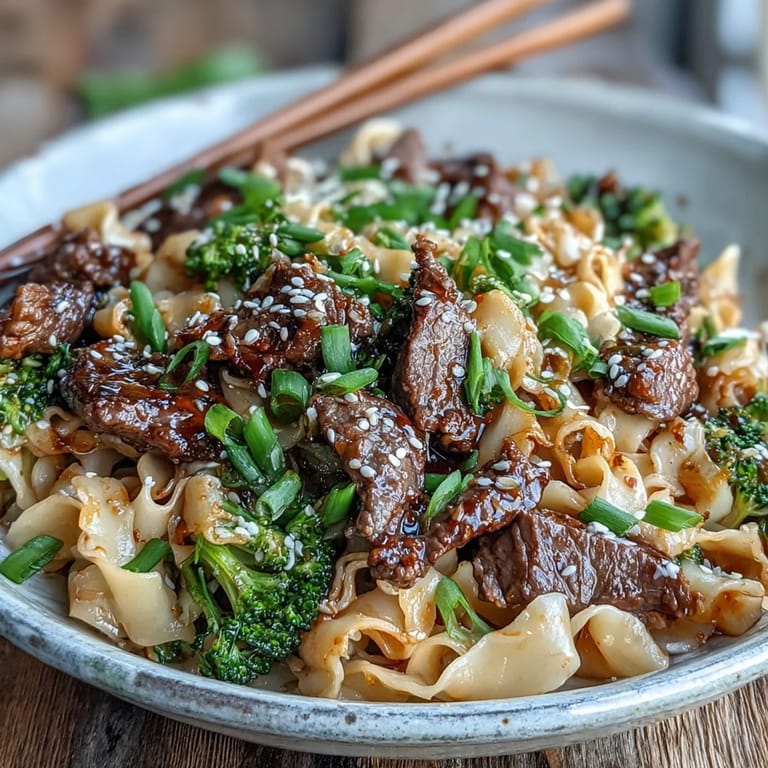
Save My neighbor once knocked on my door holding a takeout container, insisting I taste what she'd just made. Inside were glossy noodles tangled with beef and vegetables, still warm and smelling like garlic and sesame. She wouldn't tell me the recipe until I'd guessed half the ingredients, laughing every time I got one wrong. That playful afternoon turned into this dish, a version I've tweaked until it felt like mine but still carries the warmth of her kitchen.
I made this for a friend who'd just moved into a new apartment with barely any furniture. We sat on the floor with bowls balanced on our knees, slurping noodles and talking about nothing important. She said it was the first home-cooked meal she'd had in weeks, and I realized how much a simple skillet of noodles could mean when life felt chaotic.
Ingredients
- Rice noodles: They turn silky and slippery when cooked right, soaking up sauce without getting mushy if you rinse them in cold water after draining.
- Flank steak: Slicing against the grain is the secret to tender bites, and freezing the steak for 15 minutes makes it easier to cut paper-thin.
- Broccoli florets: They add crunch and soak up the garlic-ginger oil beautifully, but don't crowd the pan or they'll steam instead of sear.
- Bell pepper: Red or yellow bring sweetness and color, and I always slice them thicker than I think I should so they stay crisp.
- Carrot: Julienned strips cook faster and look elegant, plus they add a slight earthiness that balances the soy and sugar.
- Green onions: Chopped at the last minute, they bring a fresh bite that cuts through the richness of the sauce.
- Garlic and ginger: Fresh is non-negotiable here, the jarred stuff just doesn't bloom the same way when it hits hot oil.
- Soy sauce: Use low-sodium if you're sensitive to salt, because the brown sugar amplifies everything and it's easy to go overboard.
- Brown sugar: It melts into the soy sauce and creates a glaze that coats every ingredient without tasting like dessert.
- Sesame oil: A little goes a long way, and adding it at the end preserves that toasty, nutty aroma.
- Vegetable oil: High smoke point means you can crank the heat without burning, which is essential for getting a good sear on the beef.
- Sesame seeds: Toasting them in a dry pan for 30 seconds before sprinkling makes them fragrant and adds a gentle crunch.
Tired of Takeout? 🥡
Get 10 meals you can make faster than delivery arrives. Seriously.
One email. No spam. Unsubscribe anytime.
Instructions
- Prep the noodles:
- Cook the rice noodles according to the package, then drain and rinse them under cold water to stop the cooking. This keeps them from clumping into a sticky mass later.
- Sear the beef:
- Heat vegetable oil in a large skillet over medium-high until it shimmers, then add the sliced flank steak in a single layer. Let it sit for a minute before stirring so it develops a golden crust, then cook another minute or two and remove it to a plate.
- Bloom the aromatics:
- Toss minced garlic and grated ginger into the same hot skillet and stir constantly for 30 seconds. The smell will hit you fast, sweet and sharp, and that's when you know they're ready.
- Stir-fry the vegetables:
- Add broccoli, bell pepper, and carrot to the skillet and keep everything moving with tongs or a spatula. Cook for about 5 minutes until the vegetables soften but still have a crisp bite.
- Mix the sauce:
- While the vegetables cook, whisk together soy sauce, brown sugar, and sesame oil in a small bowl. Stir until the sugar dissolves completely and the sauce looks glossy.
- Combine everything:
- Return the beef to the skillet and pour the sauce over the top, tossing to coat. Add the cooked noodles and gently fold them in, working quickly so they heat through without breaking apart, about 2 minutes.
- Garnish and serve:
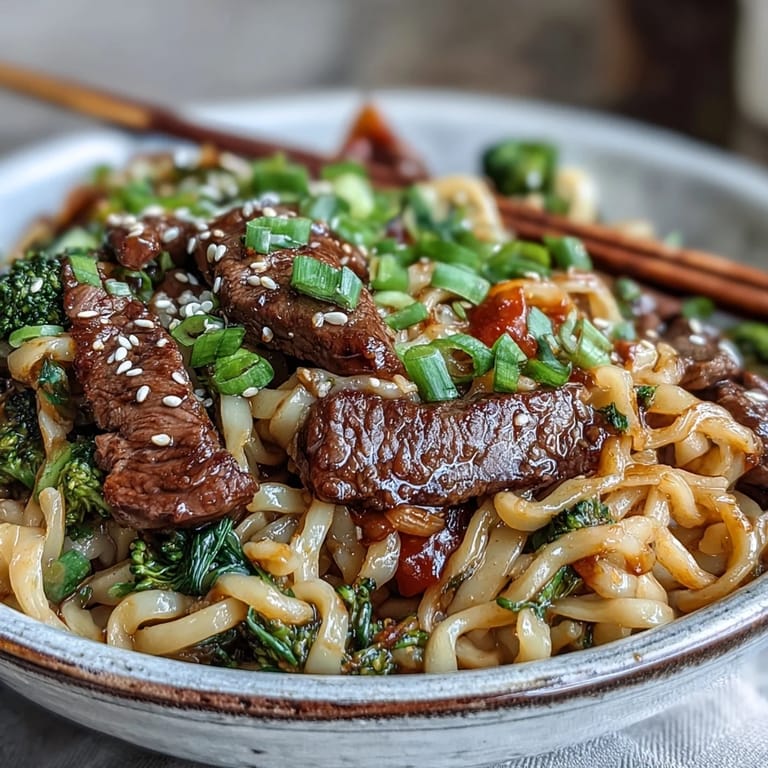
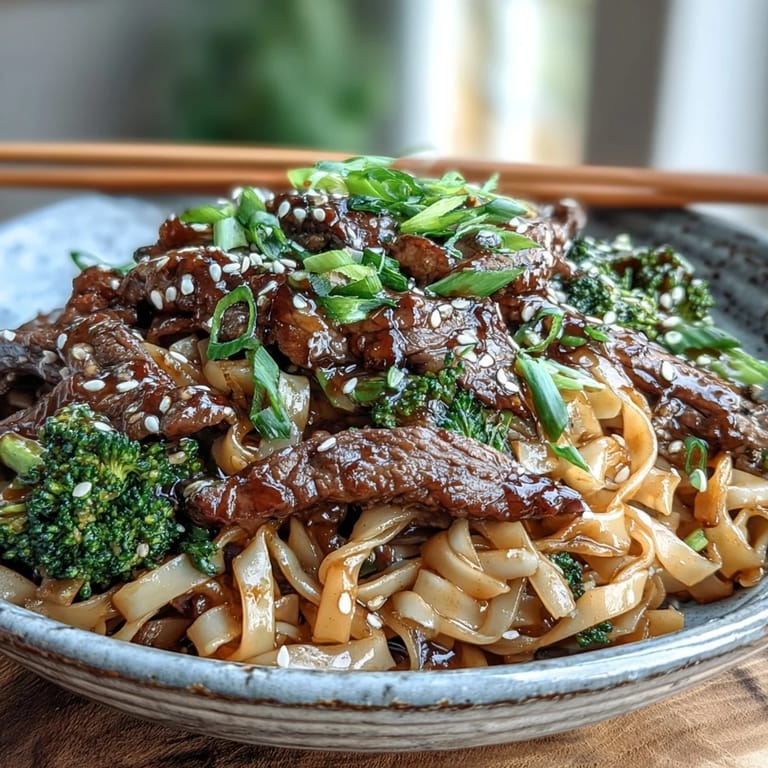
- Sprinkle chopped green onions and sesame seeds over the top before dividing into bowls. Serve immediately while the noodles are still steaming and glossy.
 Save
Save One evening I was too tired to measure anything, so I just eyeballed the sauce and tossed in an extra spoonful of brown sugar. My husband took one bite and said it was the best version I'd ever made. Sometimes the happy accidents teach you more than following the recipe perfectly, and now I always taste and adjust before I commit.
Swapping Proteins
Chicken thighs or tofu work beautifully here if beef isn't your thing. For chicken, slice it thin and cook it just like the flank steak, checking that it's no longer pink inside. For tofu, press out the moisture, cube it, and let it get golden and crispy in the skillet before setting it aside. Both soak up the sauce differently than beef, tofu absorbs it like a sponge and chicken stays juicy and tender.
Adjusting the Heat
If you like spice, stir a teaspoon of gochujang or sriracha into the sauce before adding it to the skillet. The sweetness of the brown sugar tempers the heat, so you get warmth without overwhelming the other flavors. I've also seen people add red pepper flakes to the garlic and ginger, which blooms the spice and spreads it more evenly through the dish.
Storing and Reheating
Leftovers keep in an airtight container in the fridge for up to three days, though the noodles will absorb more sauce as they sit. When reheating, add a splash of water or a drizzle of sesame oil to loosen everything up, and warm it gently in a skillet over medium heat. The microwave works too, but the noodles won't have that same silky texture.
- Store the noodles and sauce together so the flavors keep melding overnight.
- If you're meal prepping, keep the garnishes separate and add them fresh when you reheat.
- This dish doesn't freeze well because the noodles get mushy, so plan to eat it within a few days.
 Save
Save This dish has become my go-to when I want something comforting but don't have hours to spend in the kitchen. It's quick enough for a weeknight but feels special enough to serve when friends drop by unexpectedly.
Recipe FAQs
- → Can I make this dish ahead of time?
Yes, you can prepare the sauce and slice the vegetables up to a day in advance. Store them separately in airtight containers in the refrigerator. Cook the noodles and assemble everything just before serving for the best texture and flavor.
- → What type of noodles work best?
Rice noodles are traditional and provide the perfect silky texture to absorb the savory sauce. You can also use soba noodles, udon, or even spaghetti in a pinch. Just adjust cooking time according to package directions.
- → How do I slice the flank steak properly?
Always slice flank steak against the grain into thin strips, about 1/4 inch thick. Cutting against the grain shortens the muscle fibers, making the beef more tender. For easier slicing, chill the beef in the freezer for 15-20 minutes before cutting.
- → Can I adjust the spice level?
Absolutely. Add sriracha, gochujang (Korean chili paste), or crushed red pepper flakes to the sauce for heat. Start with 1 teaspoon and adjust to your preference. You can also serve spicy condiments on the side for individual customization.
- → What other proteins can I use?
Thinly sliced sirloin, ribeye, or skirt steak work beautifully. For alternatives, try chicken breast, shrimp, or firm tofu. Adjust cooking times accordingly—chicken needs about 5-6 minutes, shrimp 2-3 minutes, and tofu just needs heating through.
- → How do I prevent soggy noodles?
Cook rice noodles according to package directions, then rinse under cold water to stop the cooking process. Drain well and toss with a small amount of oil to prevent sticking. Add noodles at the end just long enough to coat them in the sauce and heat through.