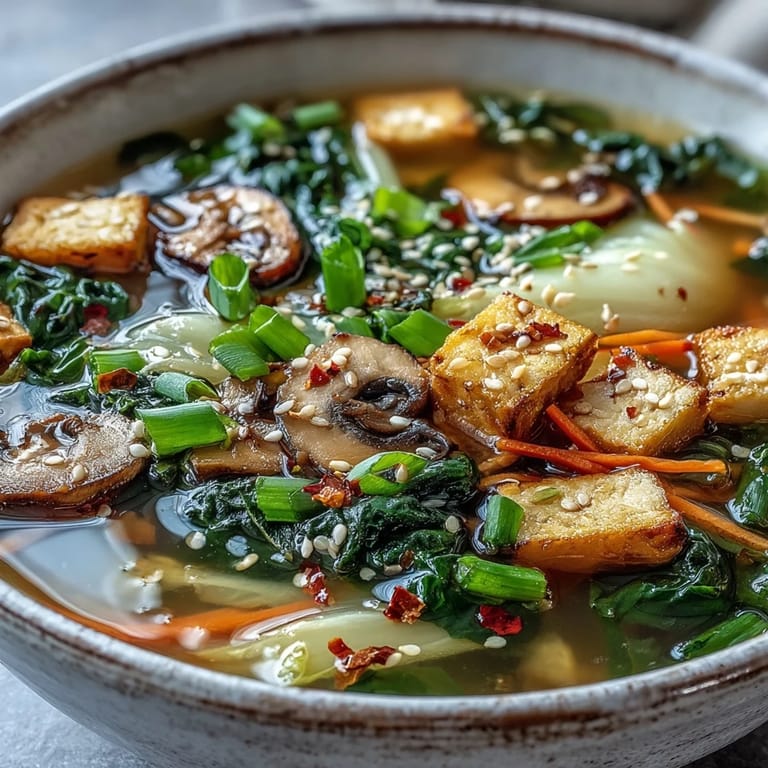
 Save
Save One gray February morning, I was standing at the kitchen window watching rain streak the glass when my neighbor stopped by with a box of incredibly fresh ginger from her garden. I had no idea what to do with so much of it until she mentioned a soup her mother used to make, something light but deeply comforting that tasted like it was healing you from the inside out. That conversation sparked the beginning of this ginger-miso soup, which has since become my go-to remedy whenever the weather turns cold and I need something nourishing without feeling heavy.
I made this for my partner one evening when they came home with a sore throat and a bad attitude about winter, and watching their shoulders drop with that first spoonful taught me something about the power of a simple bowl of soup. The kitchen filled with the smell of ginger and garlic, and by the time they finished, they were already asking when I'd make it again. That's when I knew this wasn't just a recipe I liked, it was something I'd keep returning to.
Ingredients
- Water or low-sodium vegetable broth (6 cups): This is your foundation, so if you have good homemade broth, use it—the soup will taste noticeably richer and more complex.
- Fresh ginger (2-inch piece, thinly sliced): Don't peel it; the skin adds depth and you'll strain it out anyway, so why lose that flavor.
- Garlic cloves (2, thinly sliced): Slicing them instead of mincing lets them infuse gently without becoming overpowering.
- White or yellow miso paste (2 tablespoons): This is non-negotiable; miso is where the magic happens, and the fermentation gives you those beneficial probiotics.
- Napa cabbage (1 cup, thinly sliced): It wilts down beautifully and adds a subtle sweetness that balances the ginger's bite.
- Carrot (1 medium, julienned): Thin slices matter here because they need to stay tender without dissolving into the broth.
- Shiitake mushrooms (1 cup, stemmed and sliced): Their earthy funk is essential; they add body to the broth in a way other mushrooms can't quite match.
- Scallions (2, sliced): Keep these separate for garnish; they're your bright moment when everything else is warm and muted.
- Toasted sesame seeds (1 tablespoon): Toast them yourself if you can—the difference between store-bought and fresh-toasted is worth the extra minute.
- Fresh cilantro or parsley (1 tablespoon, optional): Cilantro leans into the Asian-inspired side, while parsley is more neutral; pick based on your mood.
- Chili oil or flakes (1 teaspoon, optional): A small drizzle at the end adds a welcome heat that doesn't overpower the delicate broth.
- Silken tofu (200 g, cubed, optional): It absorbs the broth's flavor and adds protein without changing the soup's light character.
- Soba or rice noodles (100 g, cooked, optional): Soba brings a nutty note if you want to turn this into more of a full meal.
Tired of Takeout? 🥡
Get 10 meals you can make faster than delivery arrives. Seriously.
One email. No spam. Unsubscribe anytime.
Instructions
- Start your infusion:
- Bring your broth to a gentle simmer in a large pot—you want to see barely-there bubbles, not a rolling boil. This gentle heat matters because you're about to infuse it with delicate flavors that deserve respect.
- Build the flavor base:
- Add the sliced ginger and garlic, and let them simmer undisturbed for 10 minutes while you prepare everything else. You'll notice the broth becoming more fragrant and taking on a golden hue as the ginger releases its oils.
- Add the vegetables:
- Toss in the napa cabbage, carrot, and shiitake mushrooms all at once, then let them simmer for 5 to 7 minutes until they're tender but still have a slight bite. The cabbage will turn translucent and the mushrooms will darken slightly as they release their umami.
- Create the miso mixture:
- Remove the pot from heat before you add miso—this is crucial because boiling miso destroys the probiotics you're after. Scoop a ladle of hot broth into a small bowl, add the miso paste, and whisk it smooth until there are no lumps, then stir this back into the soup.
- Finish with additions:
- If you're using tofu or noodles, add them now and let everything warm through for about 2 minutes. The tofu will absorb some of the broth's warmth and flavor.
- Serve and garnish:
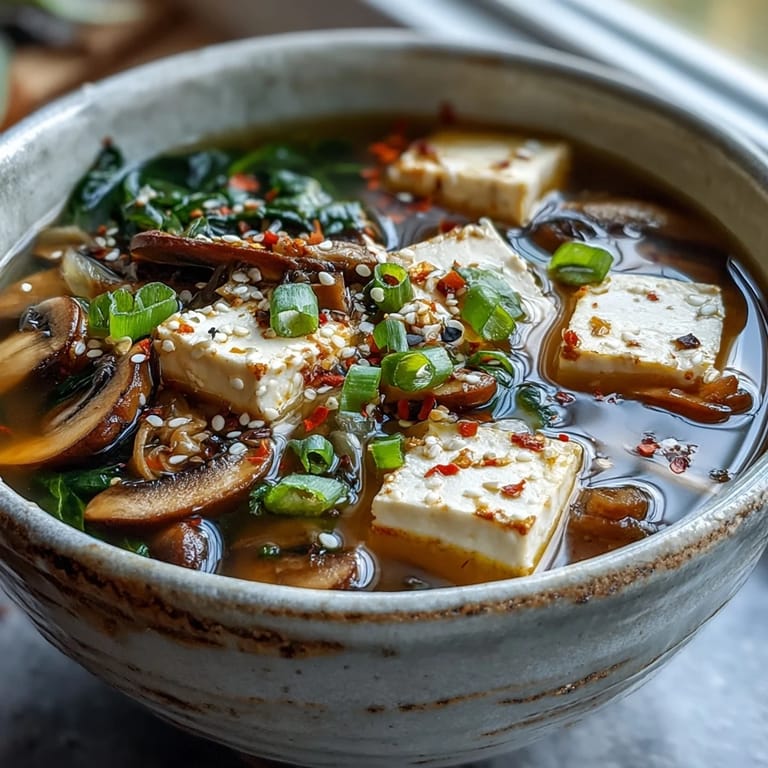
- Ladle into bowls and top with scallions, sesame seeds, herbs, and chili oil if you want a little heat. The garnishes aren't just pretty—they're the final layer of flavor and texture that makes this soup feel complete.
 Save
Save I served this soup to a friend who swears by wellness trends, and she was shocked to learn that something this simple could actually be good for your gut—no Instagram-famous ingredients required. Watching her understand that comfort and nourishment don't need to be complicated or expensive made me appreciate this soup even more.
The Ginger Question
Fresh ginger is the soul of this soup, and I've learned that not all ginger is created equal. Younger ginger, which has thinner skin and a more delicate flavor, works beautifully here, but older ginger with thicker skin brings more warmth and spice. If your ginger feels heavy and dense, you might want to use a slightly smaller piece or add it a bit earlier so it has time to mellow. The slicing method also matters; I use a mandoline or sharp knife to keep the slices thin and uniform so they infuse quickly without overpowering the broth.
Miso Magic
Miso is one of those ingredients that tastes like nothing special on its own but transforms everything around it into something deeply satisfying. White and yellow miso are both mild and slightly sweet, which is why they work so well in a delicate soup like this. Red miso would be too aggressive here, so stick with the lighter varieties unless you want a bolder, more complex soup.
Make It Your Own
This soup is incredibly forgiving and wants to become whatever you need it to be. The base is simple enough that you can pivot depending on what's in your crisper drawer, what you're craving, or what someone you're feeding actually likes to eat.
- Swap shiitake mushrooms for enoki, button, or king trumpet mushrooms, or skip them entirely if you're not a mushroom person.
- Add spinach, bok choy, or daikon radish for more vegetable variety and different flavors at each spoonful.
- A splash of soy sauce or tamari adds an extra layer of salt and savory depth if the broth feels like it needs more character.
 Save
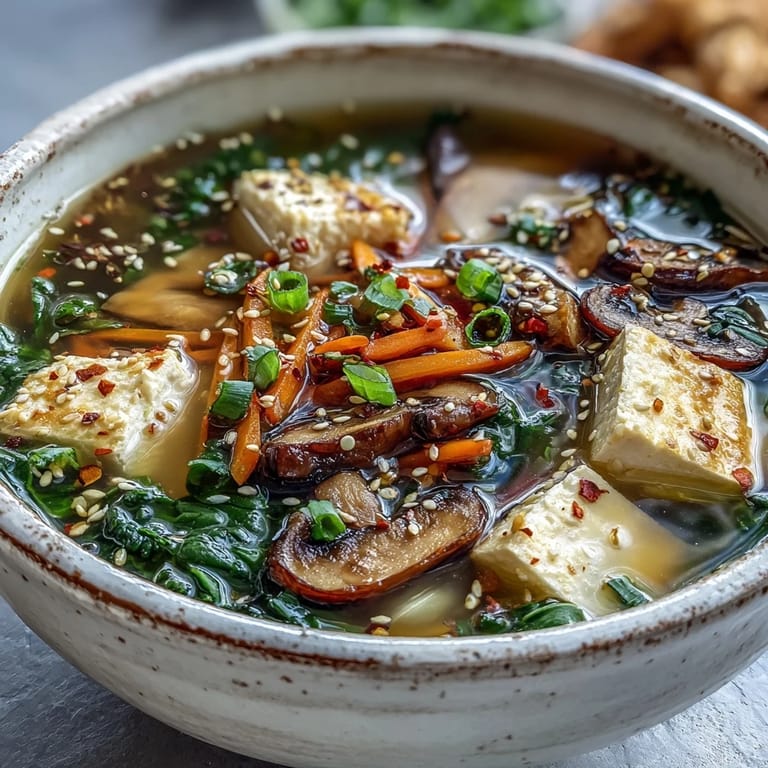
Save This soup has become my quiet winter ritual, the thing I make when I need to feel better or want to offer someone else a small moment of care. It's proof that the most nourishing things are often the simplest.
Recipe FAQs
- → Why shouldn't I boil miso?
Boiling miso destroys the beneficial probiotics and enzymes that make it valuable for digestion. Always remove the soup from heat before stirring in the miso paste.
- → Can I use red miso instead of white?
White miso has a milder, sweeter flavor that works best for this light soup. Red miso is stronger and more intense—use half the amount if substituting.
- → How long does this soup keep?
Store in an airtight container for up to 3 days. Reheat gently without boiling to preserve miso benefits. The noodles will absorb liquid, so add extra broth when reheating.
- → Is this soup gluten-free?
The base is naturally gluten-free if using gluten-free miso. Soba noodles typically contain wheat—substitute with rice noodles or serve without noodles for a completely gluten-free version.
- → Can I make this soup ahead?
Prepare the broth and vegetables in advance, but add miso just before serving. Reheat the base gently, then stir in miso off the heat for the best flavor and probiotic benefits.