 Save
Save There's something almost meditative about standing over a Dutch oven while onions slowly transform into golden sweetness, the kitchen filling with a smell that makes you understand why the French built an entire soup around this moment. My first real batch happened on a grey Sunday afternoon when I had nowhere to be and too much time to think, so I just let the heat do its work, stirring every few minutes and watching the magic unfold. The transformation felt like a small miracle, the way pale rings collapsed into deep amber strands that tasted like pure comfort. That day taught me patience isn't just an ingredient—it's the whole point.
I made this for my dad on a cold November evening when he'd had a rough week, and watching his face as he broke through that melted cheese layer felt like the best compliment any cook could ask for. He didn't say much, just kept tilting his bowl to catch every last bit of broth, and somehow that silence said everything. That's when I realized this soup isn't fancy or pretentious—it's just pure, honest nourishment.
Ingredients
- Yellow onions (5 large, thinly sliced): Yellow onions caramelize beautifully because of their natural sugars, which develop rich depth over time—don't rush this or substitute with sweet onions, which can become too cloying.
- Unsalted butter and olive oil (3 tablespoons butter, 2 tablespoons oil): The combination gives you the flavor of butter without burning, while the oil raises the smoke point so you can cook longer without scorching.
- Garlic (2 cloves, minced): Add it after the onions finish caramelizing so it perfumes the soup without becoming bitter from long cooking.
- Sugar (1 teaspoon): Just a pinch helps coax the onions' natural sweetness forward, especially if your onions aren't as naturally sugary as you'd hoped.
- Beef broth (8 cups): Quality matters here because this is your base—homemade is ideal, but a good store-bought broth beats weak bouillon every time.
- Dry white wine (1/2 cup): The acidity cuts through the richness and adds a subtle brightness that makes people ask what your secret ingredient is.
- Fresh thyme (2 teaspoons, or 1 teaspoon dried): Fresh thyme has a cleaner, more delicate flavor than dried, but dried works fine if that's what you have on hand.
- Bay leaves (2): These should go in during simmering but must come out before serving—leaving them in creates an unpleasant leafy bitterness.
- Worcestershire sauce (1 tablespoon): This adds umami depth that makes people wonder why it tastes so savory and satisfying, and it's the secret weapon most home cooks forget.
- Gruyère cheese (2 cups, grated): Gruyère melts smoothly and has a nutty complexity that regular cheddar can't match, making it worth seeking out.
- Parmesan cheese (1/2 cup, optional): If you use it, the sharpness adds a welcome cutting edge to the richness, but the soup is complete without it.
- Baguette (sliced 1/2-inch thick): Thick slices won't disintegrate under the broiler and provide enough structure to hold the melted cheese without becoming soggy.
Tired of Takeout? 🥡
Get 10 meals you can make faster than delivery arrives. Seriously.
One email. No spam. Unsubscribe anytime.
Instructions
- Melt butter and oil, add onions and sugar:
- Place your Dutch oven over medium heat and let the butter and oil get foamy together, then add your onion slices with a pinch of sugar. You'll hear a gentle sizzle and smell that first wave of caramelizing sweetness—this is the moment everything begins.
- Stir frequently as onions soften and turn golden:
- For the next 40 to 45 minutes, give these onions attention every few minutes, scraping up any bits sticking to the bottom and turning them over so they color evenly. The transformation is slow at first, then suddenly your pale pile becomes deep amber and silky—this is exactly what you're waiting for.
- Add garlic and let it wake up:
- Once those onions are truly caramelized, add your minced garlic and cook just until fragrant, about one minute—any longer and it starts tasting acrid instead of sweet. You'll smell the shift immediately, a more pungent sweetness that signals it's time to move forward.
- Pour in wine and scrape up all the goodness:
- Pour that white wine in and use your wooden spoon to scrape up every browned bit clinging to the bottom—this is liquid flavor you absolutely want in your soup. Let it bubble down for a couple of minutes until it smells a bit less sharp and vinegary.
- Add broth and herbs, then simmer gently:
- Pour in your broth along with thyme, bay leaves, and Worcestershire sauce, then reduce to a gentle simmer and let it cook uncovered for 20 to 30 minutes. The flavors meld and deepen, and your kitchen fills with a smell that makes everyone wonder what you're making.
- Season and taste, adjusting until it's perfect:
- Before serving, taste and adjust salt and pepper until it feels balanced—not too salty, but enough that you taste all those caramelized layers. Remove those bay leaves now so no one accidentally finds one in their bowl.
- Toast baguette slices under the broiler:
- While your soup finishes simmering, arrange baguette rounds on a baking sheet and slide them under a hot broiler for one to two minutes per side until they're golden and crisp. They should be toasted enough to stand up to hot broth and melted cheese but not so hard they shatter when you bite down.
- Ladle soup into bowls, top with bread and cheese:
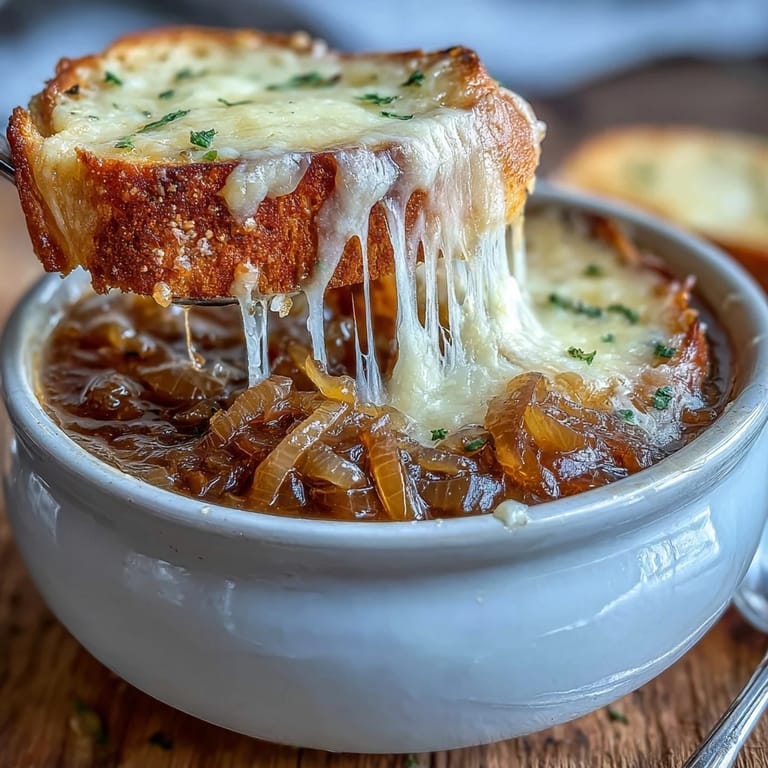
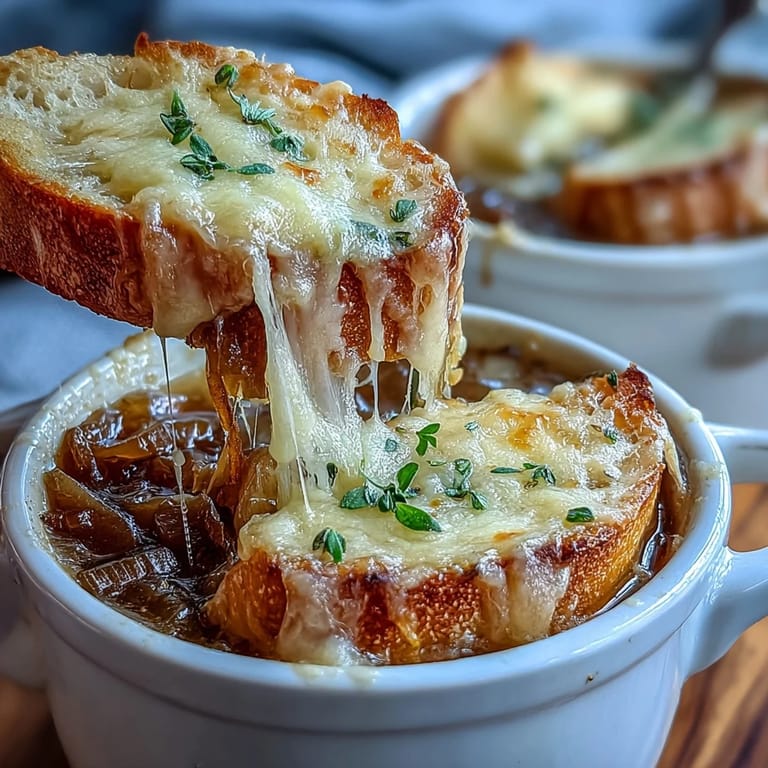
- Pour steaming soup into your oven-safe bowls, nestle one toasted baguette slice on top, and pile generous handfuls of grated Gruyère over everything. The cheese should create a little mountain that's going to melt into all those crevices.
- Broil until cheese melts and bubbles:
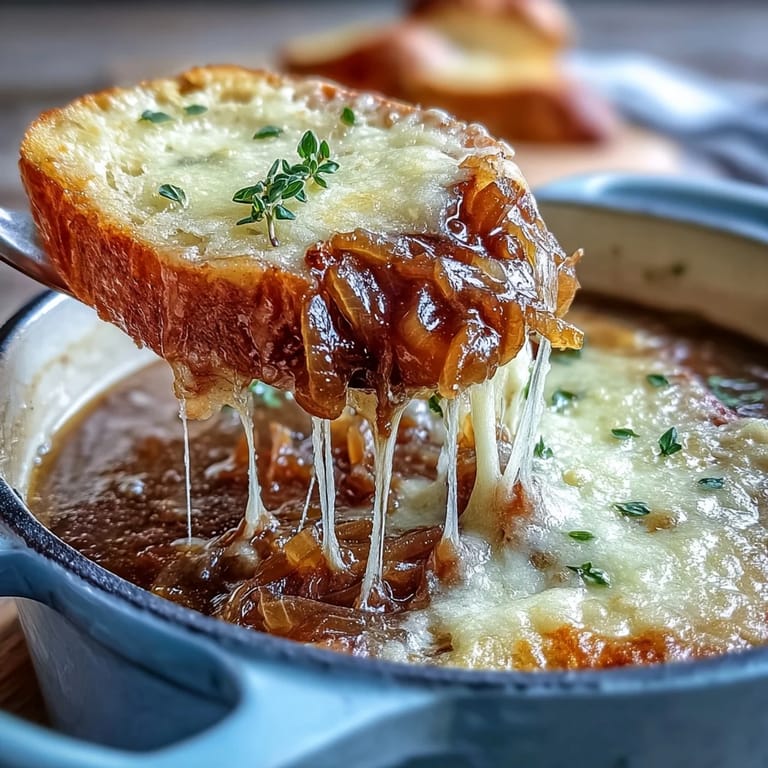
- Place your filled bowls on a baking sheet and slide them under the broiler for two to four minutes until the cheese is bubbling and golden brown at the edges. Watch carefully because the difference between perfect and burnt happens fast—you're looking for that moment when it stops being pale and starts getting color.
- Serve immediately while everything is still hot:
- Pull those bowls out carefully (they're molten hot), give them a moment to cool just enough that you can pick them up safely, then serve right away. A whisper of fresh thyme on top adds a final touch of brightness.
 Save
Save My neighbor stopped by one evening while I was making this, and the smell pulled her inside before I even invited her in. She stayed for dinner, and somewhere between the first spoonful and the melted cheese, we went from polite kitchen chat to the kind of conversation where you both realize you've known each other far longer than you actually have. Food does that sometimes—it creates moments that feel less like eating and more like belonging.
The Art of the Caramelize
The caramelization phase is where this soup lives or dies, and it's worth understanding what's actually happening so you can trust the process. As onions cook slowly, their natural sugars break down and recombine into hundreds of new compounds that taste sweet, savory, and complex all at once—and this only happens with time and medium heat, never a hurry. The color will go from pale to golden to deep amber, and each stage tastes noticeably different, which is why patient cooks get better results than rushed ones.
Why Wine Matters More Than You'd Think
That half cup of white wine does something most people miss—it brightens everything and keeps the soup from tasting monotonously rich. The acidity cuts through the deep savory notes and the fatty cheese, creating balance, and it also adds a subtle complexity that makes people taste your soup and wonder why theirs never comes out quite right. If you skip the wine or use something too sweet, you'll end up with something heavier and less interesting, so this is one place where the ingredient list isn't negotiable.
The Cheese Situation and What Works
Gruyère is traditional for a reason—it melts into silky perfection and tastes nutty without being sharp or overwhelming, which is exactly what soup needs at the end. Emmental and Swiss cheese work beautifully as substitutes if Gruyère isn't available or affordable, while cheddar tends to taste too intense and separate into greasy pools if you're not careful. Some people add Parmesan for extra sharpness, and that works wonderfully if you like complexity, but it's optional because the soup is already complete without it.
- Grate your cheese fresh rather than using pre-shredded, which contains anti-caking agents that prevent smooth melting.
- Don't skimp on the quantity—two generous cups is what makes this soup feel indulgent and rich.
- If your cheese isn't melting evenly, your broiler might not be hot enough, so give the oven a minute to fully preheat before sliding those bowls in.
 Save
Save This soup isn't complicated, but it teaches you something every time you make it—patience, attention, and the way simple ingredients can become something that tastes like it took hours of skill. That lesson is worth more than the soup itself, though the soup is absolutely worth making.
Recipe FAQs
- → How long does it take to caramelize the onions properly?
The onions need 40-45 minutes of cooking over medium heat with frequent stirring. This slow process develops their natural sweetness and deep golden color, which is essential for authentic flavor.
- → Can I make this vegetarian?
Yes, substitute vegetable broth for beef broth and use a vegetarian Worcestershire sauce alternative or omit it entirely. The caramelized onions provide plenty of rich, savory depth.
- → What cheese works best if I can't find Gruyère?
Swiss or Emmental cheese are excellent substitutes with similar melting properties and nutty flavor. You can also use a combination of mozzarella and Parmesan for good melting and flavor.
- → Do I need oven-safe bowls?
Yes, since the final step involves broiling the cheese topping, you must use bowls that can withstand high oven heat. Traditional French onion soup crocks work perfectly.
- → Can I prepare this ahead of time?
The soup base can be made up to 3 days in advance and refrigerated. When ready to serve, reheat the soup, then add the bread and cheese topping and broil fresh for the best texture.
- → Why add sugar to the onions?
The teaspoon of sugar helps jumpstart the caramelization process and enhances the onions' natural sweetness, creating a deeper, more complex flavor in less time.